
In this article
- Bengali wedding menu course order at a glance
- Keep the welcome and starters in proportion
- Build the rice, dal and vegetable courses together
- Choose the fish and main courses before adding extras
- Give the vegetarian Bengali wedding menu a complete route
- Let chutney and sweets finish the meal clearly
- Two Bengali wedding menu directions to discuss
- Turn the dish list into a service plan and quotation
- Write the menu card after the food is agreed
- Bengali wedding menu questions
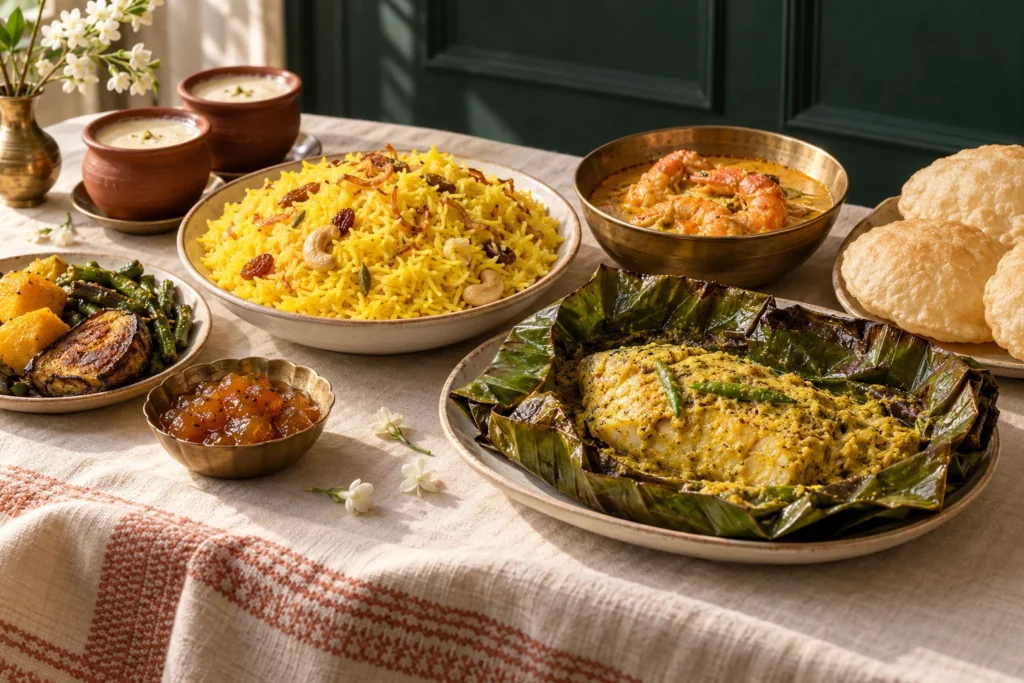
A Bengali wedding menu works best when the dishes form a complete meal. For a Kolkata reception, a practical order is welcome drinks, a short starter selection, rice or breads with vegetarian dishes, the chosen fish or meat courses, then chutney, papad and sweets. The right sequence depends on your family’s preferences, the ceremony and the way guests will be served.
Start with the food your household looks forward to. Then give each course a purpose. A menu with one memorable fish preparation, a balanced vegetarian meal and a thoughtful sweet finish can be easier to enjoy than a long list of similar dishes.
Bengali wedding menu course order at a glance
Use this sequence to begin your discussion with the caterer. A seated biye bari meal and an evening buffet may use the same dishes in different ways.
| Part of the meal | Dishes to consider | What to decide |
|---|---|---|
| Welcome | Gandharaj lime cooler, aam panna or another seasonal drink | When guests arrive and how long they wait before eating |
| Starters | Vegetable chop, fish fry with kasundi, paneer or chhana starter | A focused selection with a vegetarian option |
| Rice, breads and opening dishes | Luchi, cholar dal, steamed rice, basanti pulao, vegetables | A lighter lunch sequence or a fuller reception spread |
| Fish course | Bhetki paturi, a chosen fish curry or chingri malaikari | One principal fish direction and the portion included |
| Main course | Chicken kosha, a chosen mutton preparation, chhanar dalna or another vegetarian main | A balance of flavours and a complete meal for vegetarian guests |
| Chutney and papad | Tomato or another fruit-based chutney, with papad | How this course fits before the sweet finish |
| Sweets | Mishti doi, sandesh, rosogolla or payesh | A selected sweet course rather than several similar desserts |
A traditional Bengali meal can have a more detailed progression through vegetables, dal, fish or meat and the sweet finish. A wedding service should adapt that rhythm to the particular occasion. The Bengali cuisine teaching material hosted by CSJMU is useful background on the distinction between an everyday meal structure and richer celebratory dishes.
Keep the welcome and starters in proportion
The invitation time is not always the dinner time. Guests may arrive while the ceremony is under way or while the family is taking photographs. Give that interval its own refreshment plan instead of letting starters become an unplanned first dinner.
Choose starters with contrasting textures and preparation styles. For example, a fish fry with kasundi can sit alongside a vegetable chop or a paneer preparation. Adding several fried items may create more quantity without making the spread feel more varied.
Ask where the starters will be served, how the vegetarian choices will be identified and when the main meal will open. A room with limited circulation may suit assisted service better than several competing counters.
Build the rice, dal and vegetable courses together
Rice and the accompanying dishes provide the shape of a Bengali wedding meal. Decide whether you want steamed rice, basanti pulao, breads or a combination. Then choose dal and vegetables that give guests a satisfying route through the meal.
For a daytime family lunch, discuss whether the household wants an opening vegetable preparation, dal and bhaja before the richer courses. For an evening reception, a shorter progression may be more suitable. Shukto, for instance, should be chosen because the family wants that style of meal, rather than added automatically to every dinner menu.
Luchi with cholar dal, basanti pulao with chhanar dalna, or steamed rice with selected vegetables can each have a place in the discussion. They do not all need to appear in the same menu. Consider how the accompaniments work with the fish or meat dish you most want to serve.
Choose the fish and main courses before adding extras
For many families, the fish course is one of the decisions that defines the occasion. Bhetki paturi, a fish curry and chingri malaikari offer different flavours and service requirements. Choose the direction your guests will appreciate and ask the caterer to specify the preparation and portion clearly.
If a fish starter is already prominent, consider whether another fish preparation adds something distinct to the main meal. Similarly, a rich rice dish, several heavy mains and a long dessert list may compete with one another. Menu balance is as useful a question as the number of items.
For chicken or mutton, agree the preparation alongside the rice and breads. Ask how the chosen dishes will be served during the actual dinner window. For a buffet, the counter arrangement and replenishment plan deserve the same attention as the dish names.
If you are planning the reception and the family’s other wedding functions together, explore our wedding catering in Kolkata service and discuss each meal as its own brief.
Give the vegetarian Bengali wedding menu a complete route
A vegetarian guest should be able to enjoy every stage of the meal. Plan a welcome, starter, rice or bread choice, dal, vegetables, a substantial vegetarian main and sweets. A single paneer dish placed beside the main buffet is not the same as a complete menu.
- Welcome and starter: a seasonal cooler with vegetable chop or a chosen chhana or paneer preparation.
- Rice or breads: luchi, steamed rice or basanti pulao, selected to suit the rest of the meal.
- Accompaniments: cholar dal and seasonal vegetables, with the exact recipes agreed.
- Main course: chhanar dalna, paneer or another substantial dish chosen for the household.
- Finish: chutney, papad and selected sweets, with ingredients checked against the guest brief.
List ingredient exclusions individually. Vegetarian preferences, a request to avoid onion and garlic, and requirements described as Jain or sattvik are different briefs. Confirm preparation, utensils and service arrangements for the particular gathering before settling the menu.
Let chutney and sweets finish the meal clearly
Chutney and papad can mark the transition from the main course to dessert. Choose the chutney flavour alongside the rest of the spread, then decide how many sweets the occasion actually needs.
Mishti doi offers a different texture from sandesh or rosogolla, while payesh may have its own place in the family’s preferences. The Howrah District Administration’s note on mishti doi describes its connection with Bengali food culture. For your wedding, the useful choice is which sweets your guests will enjoy at the end of this particular meal.
Coordinate the serving vessels, portions and timing with the caterer. If cake or another dessert is also part of the programme, consider it alongside the traditional sweets rather than planning the two separately.
Two Bengali wedding menu directions to discuss
A family lunch with a familiar progression
Begin with a welcome drink, then a rice-led meal with a vegetable preparation, dal and bhaja, a chosen fish course and the family’s preferred main. Follow with chutney, papad and selected sweets. Adjust the sequence and dishes to the household’s traditions and the time available for serving.
An evening reception with a focused spread
Plan welcome refreshments and two contrasting starters, followed by pulao or breads, vegetarian accompaniments, a selected fish preparation and a chosen chicken or mutton main. Finish with chutney and a concise sweet course. Develop a complete vegetarian version at the same time.
Neither direction is a fixed package. Use our Bengali menu ideas to shortlist dishes and the menu builder to bring your favourites into an enquiry.
Turn the dish list into a service plan and quotation
A Bengali wedding menu list becomes useful when it is connected to the guest count, venue and meal window. Confirm these details before comparing quotations:
- Guest range: distinguish the total invitation list from the number expected to eat in each service window.
- Meal sequence: identify welcome refreshments, starters, the main meal and dessert as separate stages.
- Venue facilities: check preparation space, water, power, counters and the route for moving equipment.
- Included service: list staff, crockery, cutlery, linen, counters, transport and clearance where relevant.
- Food requirements: record vegetarian choices and exact ingredient or preparation instructions.
- Written inclusions: agree the dishes, portions, service duration and booking terms in the quotation.
For a Kolkata home, share the entrance, floor and usable dining space. For a banquet hall, confirm which facilities external caterers may use. You can also explore our Kolkata catering areas to find planning guidance for your venue’s neighbourhood.
Write the menu card after the food is agreed
A Bengali marriage menu card should reflect the final meal, not an early wish list. Check dish names, spellings and the order guests will recognise. If you use Bengali and English together, have the family review both versions before printing.
Separate the menu’s visual theme from the decision about what will be served. A beautifully arranged card cannot resolve an unclear vegetarian option, a missing course or a dish that has changed since the quotation.
Bengali wedding menu questions
What dishes are usually considered for a Bengali wedding menu?
Common choices to discuss include luchi and cholar dal, basanti pulao, vegetables, a fish preparation such as paturi, a chosen chicken or mutton main, chutney, papad and sweets such as mishti doi or sandesh. Select a balanced meal for the household and guest list rather than treating every dish as compulsory.
What is the best Bengali wedding menu course order?
For a catered reception, a practical order is welcome drinks, starters, rice or breads with accompaniments, the selected mains, then chutney, papad and sweets. A seated family meal may use a more detailed progression. Agree the sequence with the caterer around the ceremony and venue.
Can a Bengali wedding menu be fully vegetarian?
Yes. Build every course around vegetarian dishes, including starters, rice or breads, dal, vegetables, a substantial main and sweets. Discuss exact ingredient exclusions and preparation requirements before the menu is confirmed.
Should the wedding lunch and reception dinner have the same menu?
They can be planned differently. Give each meal its own guest range, time of day and priorities. This helps you vary the food and service while keeping the dishes that matter to the family.
Ready to shape the menu around your own guests? GS Signature Wedding & Events is based in Ballygunge, Kolkata. Discuss your date, venue and preferred dishes through the enquiry form alongside this article.
Bring your occasion into focus
Let’s plan the details
around your guests.
Share your name, email and phone. We’ll discuss the occasion, venue and menu with you.
Discuss your plans