

In this article
- Write the ceremony brief first
- A terracotta courtyard mandap
- A light floral canopy
- Fabric and foliage with a restrained frame
- An alpona-inspired ceremony setting
- An intimate indoor mandap
- The layout questions that matter
- Outdoor mandap planning
- Keep the decoration budget tied to the scope
- What to confirm with the decorator
- Mandap decoration questions
Wedding mandap decoration should begin with the ceremony requirements and the venue. Confirm the people, seating and movements the rites need, then choose the frame, flowers, fabric and lighting. The mandap must work as a ceremony space as well as look right in photographs.
For a Bengali wedding in Kolkata, a terracotta palette, a courtyard-inspired arch or a restrained floral canopy can connect the setting with the city’s architectural character. Choose one main direction and let the ceremony remain the centre of the design.
Write the ceremony brief first
Ask the family and officiant to confirm the ceremony arrangement before the decorator finalises the layout. Identify who sits where, the items that need a place and the movements that must remain clear.
Give the decorator the actual venue plan. Include the route used by the couple and family, guest seating, photography positions and any transition to another part of the celebration. A reference photograph can guide the style, but it does not show whether the arrangement will fit your room.
Our Bengali wedding planning checklist helps connect the ceremony with the wider schedule.
A terracotta courtyard mandap
Use warm terracotta and ivory with an architectural frame that suggests a courtyard entrance. Keep the central area visually quiet and bring the stronger detail to the outer frame or selected side panels.
This direction can connect well with a venue that already has warm surfaces or an older architectural character. Ask for a material and colour presentation showing the frame, fabric, flowers and seating together. A coordinated palette is easier to assess than separate images collected from several weddings.
A light floral canopy
Choose a clear canopy shape and concentrate flowers where they define its edges. Keeping some visual space between arrangements can help the ceremony remain visible to guests.
Discuss the flower palette, the areas actually covered and the effect from different viewing positions. A canopy that appears full in a close photograph may look quite different from the guest seating. Ask the decorator to explain both views.
Fabric and foliage with a restrained frame
Use fabric to soften the structure and foliage to establish its outline. A small amount of a chosen flower colour can connect the mandap to the family’s wider décor without filling every surface.
Let the professional installation team and venue approve materials and their placement around the ceremony. Agree which technical details they will resolve with the officiant, particularly where ritual arrangements affect the space.
An alpona-inspired ceremony setting
Bring alpona-inspired line work into the backdrop or selected floor graphics, with a quieter frame above. Decide where the pattern will be visible once seating and ceremonial items are in place.
Use the motif as a unifying detail rather than a pattern behind every person and object. A clear border or central visual accent can give the setting identity while keeping photographs and guest views readable.
An intimate indoor mandap
For a smaller venue, reduce the decorative footprint before reducing the space needed for the rites. A simpler frame, controlled flowers and a deliberate backdrop can create a complete setting without overwhelming the room.
Ask whether all guests need to face the ceremony at once or whether the family prefers a more intimate arrangement with another space for the larger reception. Settle that choice before committing to the size of the installation.
The layout questions that matter
| Part of the plan | Question to settle |
|---|---|
| Ceremony area | Can the officiant and family use the space as required? |
| Entry and movement | Are the agreed ceremony routes clear? |
| Guest seating | Can guests see the ceremony from the proposed arrangement? |
| Photography | Where can the team work without obstructing people? |
| Venue access | When can installation begin, and how will equipment enter? |
| Transition | Will the mandap remain in place or does the room need a reset? |
| Professional sign-off | Who confirms the installation and venue requirements are satisfied? |
Review this plan with the decorator and venue together. The family should not have to resolve conflicting installation and room-layout assumptions on the wedding day.
Outdoor mandap planning
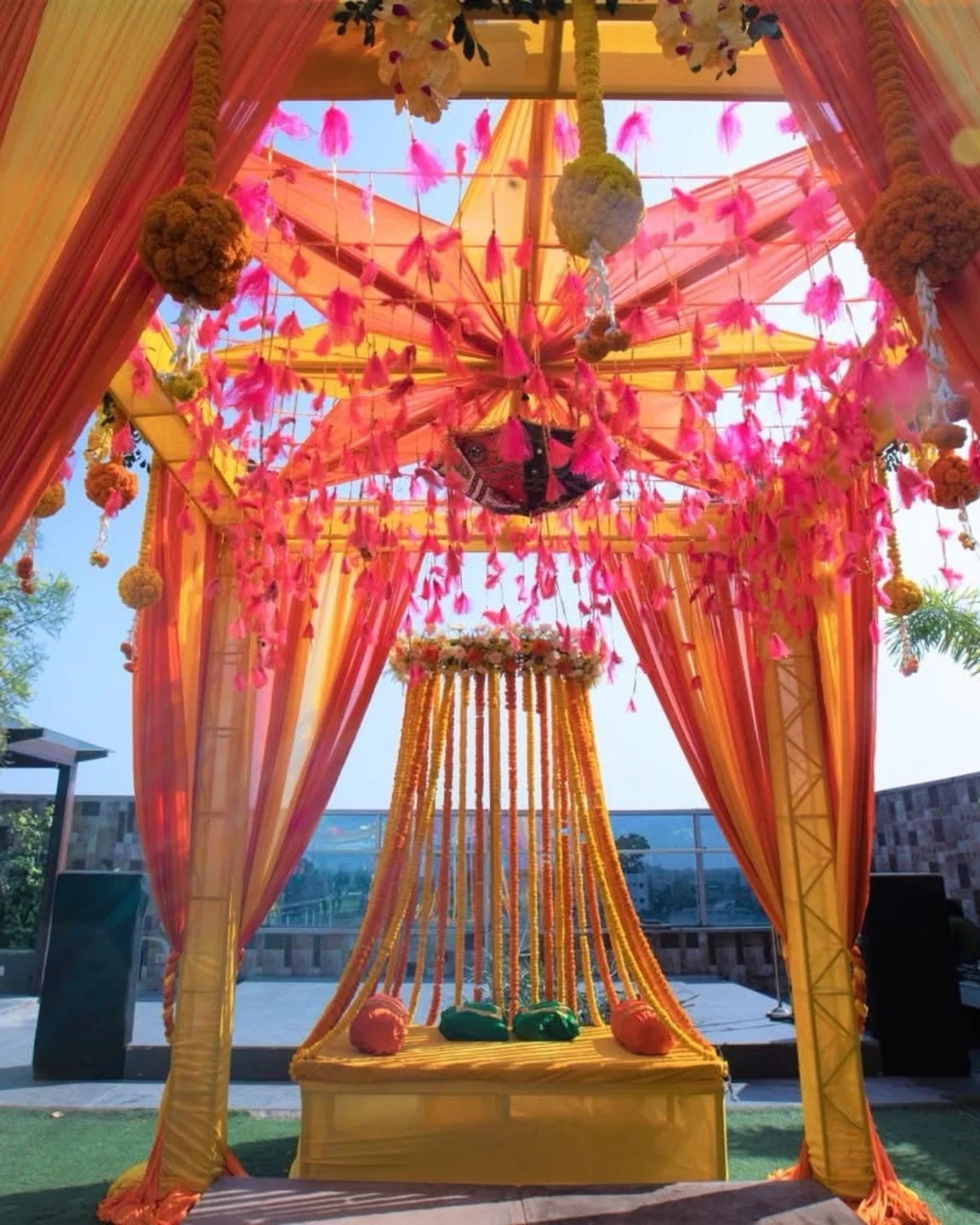
An outdoor setting needs an agreed indoor or covered alternative appropriate to the venue. Discuss the decision time, who authorises the move and what the alternative decoration includes. Do not leave the fallback as an undefined promise to rearrange things if needed.
Share the outdoor plan with the catering and photography teams. The ceremony, guest seating and food service should use compatible routes. Have the venue and installation professionals settle the site, weather, electrical and structural requirements for the actual arrangement.
Ask whether the alternative space is reserved for your event and whether using it changes any charges or programme timings. Record the answer in the booking documents.
Keep the decoration budget tied to the scope
Compare the frame, flowers, fabric, seating, lighting and installation together. Ask what is hired, what is custom-made, what is included in the agreed finish and what may be substituted.
If the budget needs adjustment, choose the elements with the greatest visual effect first. Simplifying repeated decorative surfaces can be more coherent than reducing every part of the design slightly. Preserve the ceremony’s usable space and the venue-approved installation requirements.
Coordinate the mandap with the reception stage through shared colours or details. The two can belong to the same celebration while meeting different needs.
What to confirm with the decorator
- The agreed visual direction, layout and included materials.
- The family and officiant’s ceremony requirements.
- Flower choices and the approval process for substitutions.
- Lighting and photography coordination.
- Venue permissions, access and installation responsibilities.
- Any outdoor alternative and its included scope.
- Set-up completion, inspection, room resets and removal timing.
Mandap decoration questions
What is a good mandap design for a Bengali wedding?
Choose a design that fits the family’s ceremony and the venue. Terracotta architectural frames, restrained floral canopies and alpona-inspired details are possible visual directions once the working layout is agreed.
Can a mandap fit in a small indoor venue?
Discuss the actual ceremony and guest layout with the family, officiant, venue and decorator. A simpler decorative frame may help, but the space needed for the rites and movement must be resolved first.
What should an outdoor mandap booking include?
Agree the main design, professional installation responsibilities, venue conditions and a defined alternative arrangement, including the decision process and any cost changes.
Plan the ceremony setting with GS Signature Wedding & Events in Kolkata. Use the form to discuss your venue, programme and the architectural or floral direction you have in mind.
From our work
Ceremony settings from our work.
A look at the people, settings and details behind our wedding functions and family occasions.

Bring your occasion into focus
Let’s plan the details
around your guests.
Share your name, email and phone. We’ll discuss the occasion, venue and menu with you.
Discuss your plans