
In this article
- Agree the family programme before booking the detail
- Aiburo bhaat: plan a personal family meal
- Gaye holud: give the ceremony and guests room
- The wedding ceremony: coordinate transitions
- Bou bhaat and the reception: plan the next gathering
- A Bengali wedding planning checklist you can use
- Put food into the schedule early
- Make the final handover simple
- Bengali wedding planning questions
A useful Bengali wedding checklist connects the family’s rituals with the practical arrangements around them: the people involved, the space, the meal, photographs and movement between venues. Begin with the ceremonies your own household will observe, confirm their sequence with the officiant, then build the event schedule around that agreed programme.
This guide focuses on planning around familiar Bengali Hindu wedding functions, including aiburo bhaat and gaye holud. It is a framework for organising your celebration; the family and officiant should settle the actual rites and their requirements.
Agree the family programme before booking the detail
Customs differ between communities and households. A 2024 anthropological study of two Hindu Bengali communities in Kolkata documents both shared practices and differences. Use your own family’s decisions as the starting point for supplier instructions.
Create one list of functions with an owner for each. Record the date, place, expected guests, ceremony contact and whether a meal will be served. Add the times that must be fixed, then leave room around the parts that can move.
Keep the ritual checklist and the event checklist connected but distinct. The officiant may need particular ceremonial items; the caterer needs a serving brief; the photographer needs the moments the family wants covered. One schedule should show how these responsibilities meet.
Aiburo bhaat: plan a personal family meal
Aiburo bhaat is associated with a pre-wedding meal for the bride or groom. Make the hosting brief personal: who is gathering, which dishes matter to the person being celebrated and how the family would like to serve them.
A smaller home meal can allow more time together than a large event format. Check seating, the serving surface and the preparation space before choosing a long menu. If relatives are arranging more than one meal, coordinate dates and avoid adding a rushed function between other commitments.
Put the host, guest range, meal time and favourite dishes on the planning sheet. Keep photography expectations clear so the meal does not become an extended photo session before anyone can eat.
Gaye holud: give the ceremony and guests room
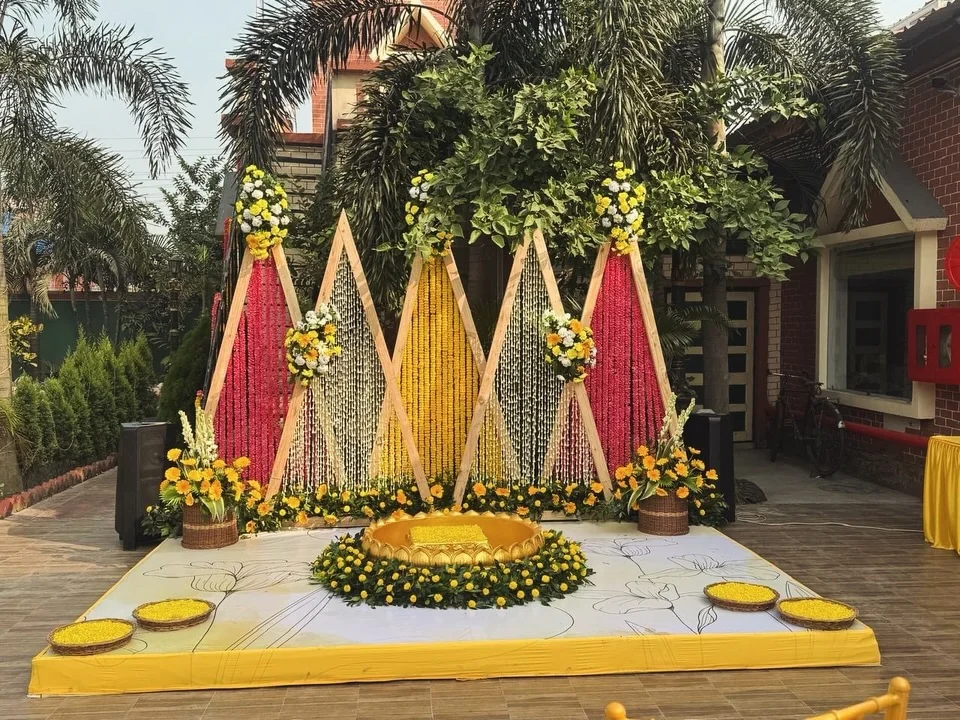
Gaye holud is the turmeric ceremony in the wedding programme. Confirm the family’s participants, materials and sequence, then plan seating, a changing space, photographs and refreshments around it.
Keep food service away from the area used for the ceremony. Discuss how the space will be reset afterwards and who will manage that transition. If the same venue is being used for another function, allow a realistic interval for cleaning and supplier work.
For the meal, a short refreshment selection or a complete lunch can both make sense, depending on the invitation and timing. Be clear with guests about what is being hosted and with the caterer about when service should begin.
The wedding ceremony: coordinate transitions
Familiar ceremony moments can include boron, saat paak, shubho drishti, mala badal and further rites led by the officiant. Confirm which are part of your programme and what each needs before the décor and photography positions are finalised.
The event plan should provide a clear route for the couple and family, appropriate seating and room for those directly involved. Ask the decorator and photographer to review the same layout so equipment and floral structures do not obstruct an important movement.
Agree a contact who can communicate timing changes to the catering team. Guests may need refreshments while the ceremony continues, and the family should have an agreed opportunity to eat.
Bou bhaat and the reception: plan the next gathering
Bou bhaat is a post-wedding family occasion associated with the bride’s welcome and a meal. Some households also host a larger reception around this part of the programme. Confirm your family’s arrangements rather than assuming every function follows the same calendar.
Consider who attended the wedding meal and who will attend the reception. Give each gathering its own food brief so that the celebration feels connected without repeating every dish. Our traditional and modern reception menu guide can help compare directions.
A Bengali wedding planning checklist you can use
| Planning area | Write down | Agree with |
|---|---|---|
| Family programme | Functions, participants, rites and fixed timing requirements | Family and officiant |
| Venue and movement | Access, supplier entry, rooms, seating and travel between locations | Venue contact and coordinator |
| Meals | Guest range, menu, dietary brief and serving windows for each function | Caterer and host |
| Décor | Ceremony space, stage, guest routes, installation and reset times | Decorator and venue |
| Photography | Priority moments, family groups and time for the couple to step away | Photographer and family contact |
| Payments and decisions | Approved scope, due dates and who can authorise a change | Named booking contact |
Keep the schedule useful for the people doing the work. Give suppliers the details they need, including a contact number supplied privately, rather than sending a large family conversation and expecting them to find the final decisions.
Put food into the schedule early
List every hosted meal, including smaller meals at home. Record expected diners separately for relatives, guests and any supplier meals you agree to provide. Confirm when the final guest count is due and how changes will be handled.
Use the wedding food checklist for the catering details and the Bengali wedding menu guide for course planning. Connect each menu to a place, a service window and a person who can signal that serving should begin.
Make the final handover simple
Before the celebration, circulate one current programme with locations, key timings and responsibilities. Remove superseded versions from the working conversation. Confirm venue access and delivery arrangements with each supplier rather than assuming they have spoken to one another.
Choose a coordinator who can answer routine questions while the couple and close family take part in the functions. Leave a little space in the programme for guests to arrive, photographs to finish and the family to pause.
Bengali wedding planning questions
Which Bengali wedding rituals should be on the checklist?
List the functions your family will observe, then confirm their rites and sequence with the officiant. Aiburo bhaat, gaye holud, the wedding ceremony and bou bhaat can each need a separate practical brief.
Should catering follow a fixed ceremony finish time?
Agree the intended meal window and a clear communication plan if the programme changes. Identify who will tell the catering team when service may begin.
Can one team help coordinate several functions?
Discuss each function, venue, guest range and required scope together. Ask for the responsibilities and inclusions to be set out clearly before booking.
Explore wedding planning with GS Signature and wedding catering in Kolkata. Use the enquiry form to discuss the functions your family wants to bring together.
From our work
Celebrations we’ve brought to life.
A look at the people, settings and details behind our wedding functions and family occasions.

Bring your occasion into focus
Let’s plan the details
around your guests.
Share your name, email and phone. We’ll discuss the occasion, venue and menu with you.
Discuss your plans